• Skip to primary navigation
  • Skip to main content

Soul Seeds

Healing with Humanity

  • Home
  • Our Mission
    • Why Meditate?
  • Meet the Board
  • What We Do
    • How To Get Involved
  • Testimonials
  • Contact Us
  • DONATE
  • News & Updates

News & Updates

News & Updates | May 2022

Melanie Davis-Jones · May 15, 2022 · Leave a Comment

We Need to Talk

When I was nine years old, eight days before Christmas, my grandmother passed away. Nearly three decades later I learned the actual cause of death. She had taken her own life. I recognize that when it happened, I was considered too young to be told, yet the stigma clouded memories of her and shrouded in secrecy parts of our family history. This is true, I’m sure, for countless families.

The loss of Naomi Judd, three highly accomplished female college athletes – Sarah Shulze, Katie Meyer, Lauren Bernett — Regina King’s son, Ian Alexander Jr., Miss USA Cheslie Kryst — all in seemingly rapid succession this year — are only some of the most high-profile individuals lost to mental illness. Yet, according to Mental Health America, more than 11 million adults have suicidal thoughts.

We need to talk (about what we get wrong). During a training on suicide prevention, presented by Living Works they pointedly tackled one of the most common misperceptions about suicide. That is, if you ask someone if they are considering killing themselves, you’re putting ideas in their heads – not true. “Asking clearly, calmly and without judgment allows people to talk about their thoughts. Up until getting asked, they may not have felt they could talk about the deep pain they’re in. Asking shows you take it seriously; you can help connect them to resources and support.”

We need to talk (about how we treat one another). In a recent interview with Cheslie Kryst’s mother, April Simpkins said Cheslie had “high functioning depression.” Her stunning achievements (in sports, academia, entertainment) were “no match for what she struggled with in her own mind … exacerbated by comments in social media.” Then she made a sad observation, “People aren’t kind to people with mental illness.” There is a real need for open, honest dialogue about mental illness, especially for those seeking treatment, to give them the same unconditional support given to people coping with physical illnesses.

Photo by Liza Summer on Pexels.com

We need to talk (about checking in… genuinely checking in). Simpkins also pointed out that her daughter was adept at deflecting what was really going on with her. In response to a question about how she was doing, Cheslie would quickly turn it back to the inquirer, letting the conversation naturally flow to their lives instead of hers. This observation made me pause and think about how much more intentional I could be about checking in with people I care about. You’ve likely heard the phrase, “check in on your strong friends” – they may be carrying the heaviest burdens and adroitly hiding the weight. Check in. Listen carefully. Let people feel seen, heard, and valued.

We need to talk (about prevention). Mental Health America advocates making mental health screenings common for all ages, including children, for early intervention. They have a free online screening tool here. “People needing early intervention want four things, and only one of these is a referral to treatment. The others are: more information about their mental health problem; tools they can use themselves to monitor and improve their mental health; and connections to people like themselves who have had the same feelings, thoughts, experiences, and lived through them to recovery.”

We need to talk (about how alternative therapies can support mental health). This is the work of Soul Seeds. Our specific meditation techniques can help people cope with anxiety, stress, and depression. Many of our volunteers, trained in these techniques, cite the fact that their lives have been dramatically changed by the meditations and learning how to work with their own energy. Each of them wants to give back because they know the positive influence of this work on their lives.

Soul Seeds connects with communities that have had little to no access to meditation and its benefits. After a recent session with a team from the Tacoma Housing Authority, each person commented on how stressed, even anxious, they felt coming into the session and how surprised they were that, after a 15-minute meditation, they felt better and more relaxed. In addition, we are seeing continued progress with the young people at the HYPE Center – they report feeling more engaged, more connected with their lives, their hopes, and their dreams. One young man said, “I feel super energized after we meditate … and when I feel energized, I feel like anything is possible!”

Suicide is an excruciatingly stark reality, and I am not suggesting that meditation is the panacea. I am not a psychologist, therapist, or other mental health professional — I am conversant only in my own experience — but for Mental Health Awareness month, it simply felt important to talk about it.

This image has an empty alt attribute; its file name is MDJ-signature250.jpg

Melanie Davis-Jones (she/her/hers)
Executive Director

In Case You Missed It:

Empower Your Grounding – For Rapid Emotional Stability | This video by founder, Nancy Rebecca explores the top six energetic reasons why you experience anxiety triggers and a way to manage them.

The Energetics of Anxiety | Video by founder, Nancy Rebecca

Resources:

If you or someone you know is in crisis, contact the Suicide Prevention Lifeline at 1-800-273-TALK (8255), or dial 911 in case of emergency.

This compilation of Mental Health Resources from Mental Health First Aid, includes help lines and support groups.

News & Updates | April 2022

Melanie Davis-Jones · Apr 15, 2022 · Leave a Comment

Putting Away Our Erasers

I attended a Tacoma Symphony concert last month. The energy of the theater was abuzz with anticipation, yet there was an undercurrent of unsettledness (as seen through the eyes of an energy healer — perhaps its source was most of us being out of comfy clothes for the first time in years). The concert featured the dazzling pianist Pallavi Mahidhara. With the first notes of the orchestra, the majesty of live music calmed the energy, though not completely.

When Mahidhara took the stage for her encore, she said instead of a solo, she and the chorus, Symphony Tacoma Voices, would perform the Ukrainian national anthem. There was a collective gasp of appreciation from the audience, and everyone stood as the music began. The energy of unsettledness shifted fully to that of compassion. Its vibration filled the room and for those few moments, we felt the potency of standing together, in unity. 

Dictionary.com defines unity as “a whole or totality as combining all its parts into one.” It prompts us to consider how — with differing backgrounds, beliefs, and experiences – we can find commonalities that link us together in a magnificent mosaic.

Photo by Kyle Glenn on Unsplash

For the April Equity Conversation, our Board and volunteers will be exploring Cultural Competency. What is cultural competence? “It is the ability to understand and effectively interact with people from cultures different from our own. It requires the following: a basic understanding of your own culture and ethnicity; a willingness to learn about the cultural practices and worldview of others; a positive attitude toward cultural differences; and a willingness to accept and respect these differences.” [Source: What is cultural competence, and why is it important? (bctpartners.com)]

Fundamentally, cultural competence is an invitation to examine the premise of the stories we tell ourselves – about our own experiences and about what we believe are truths about everyone else, particularly “truths” that can feel limiting or dismissive. Author and poet Ocean Vuong observed, “Sometimes you are erased before you are given the choice of stating who you are.” Assumptions are erasers.

Emphatically stating who you are has come up several times at the HYPE Center. We’ve had young people who have said they are “totally psychic” or “one of the Indigo children” or they “know how to throw their energy” – perhaps calculated for shock value to bewilder us “old folks” but in each instance, hearing their declarations, we validated them. The choice to state how they saw themselves came with an awareness they were among people they could trust — who understood when many adults in their lives had scoffed at how they defined themselves.

There is power in defining ourselves and creating space for others to do so as well. That’s part of building cultural competence. You don’t need a formal DEI training session to practice building cultural competence. Listening carefully and responding thoughtfully, with your own willingness to be a bit vulnerable, are great starting points.

Speaking of starting points, I am delighted to share that we have signed a partnership agreement with the Tacoma Housing Authority to work with their new 2GEN program. This pilot “emphasizes a two-generational approach to housing and family stability for families with school-aged youth, with wrap-around services focused on family goal setting, social-emotional learning, and practice.” We are excited to be part of the team and anticipate starting our sessions in June.

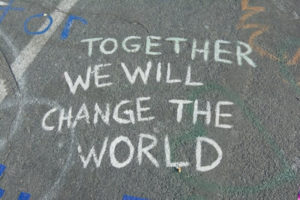
It feels like the energy of change is in the air. Let’s embrace it, recognizing we’re all in this together and the more we understand one another; the more our own unique inner light shines brightly on another, we are creating conditions for a consciousness of unity to grow.

And one final note, for this National Volunteer Month, a tremendous thank you to our amazing team of volunteers. Your passion, your enthusiasm, and your commitment to Soul Seeds are greatly appreciated – we couldn’t do it without you!

This image has an empty alt attribute; its file name is MDJ-signature250.jpg

Melanie Davis-Jones (she/her/hers)
Executive Director

In Case You Missed It:

Empower Your Grounding – For Rapid Emotional Stability | This video by founder, Nancy Rebecca explores the top six energetic reasons why you experience anxiety triggers and a way to manage them.

Resources:

Earth Day is April 22. “For Earth Day 2022, we need to act (boldly), innovate (broadly), and implement (equitably). It’s going to take all of us. All in. Businesses, governments, and citizens … a partnership for the planet.” [Earth Day: The Official Site | EARTHDAY.ORG]

April is Sexual Assault Awareness Month. This year’s theme is Building Safe Online Spaces Together. “We can build inclusive, safe environments … making respect the norm everywhere, taking action to promote the safety of others, and showing survivors they are believed and supported.” [National Sexual Violence Resource Center (NSVRC)]

April is also the National Month of Hope – “celebrating the belief that things will work out, especially when it seems otherwise … let’s become bearers of hope — spread it and teach it!”

News & Updates | March 2022

Melanie Davis-Jones · Mar 14, 2022 · Leave a Comment

We Need to Do More

That was the simple statement posted by one of my high school friends on Facebook several days ago. She was talking about a more robust governmental response to the war in Ukraine; many chimed in their agreement. I have another friend who, as I write, is on a plane to Romania to assist with the influx of refugees there. Even though he’s a specialist in humanitarian response, hearing of his deployment gave me that slight pang of guilt. I need to do more.

I realized though, that “doing more” is predicated on doing something. Certainly, the sheer scale of what’s happening in the world can be overwhelming to the point that we freeze, immobilized by anxiety or fear or futility. However, just as many of us are doing meditations or sending prayers to the people of Ukraine to let them know they are not alone, we must remind ourselves of the same. We are not alone in holding space for healing — that a collective consciousness for good can be utterly transformative.

“If you are part of a choir, you only have to sing a few notes, and then you get to rest and trust that the melody still goes on,” observed Laura Schmidt, founding director of the Good Grief Network. Though she was referencing action against climate change, her words ring true. As we look at the conditions in our communities and in our world, each of us, singing our own notes, is what it takes to do something … and then “do more.” When we buy into the narrative that our actions don’t really matter, we lose the opportunity to be a force for change, for good — for holding the light.  

Photo by engin akyurt on Unsplash

With March being Women’s History Month, this year’s theme, Women Providing Healing, Promoting Hope seems quite fitting. From the National Women’s Alliance, the theme is “both a tribute to the ceaseless work of caregivers and frontline workers … and a recognition of the thousands of ways that women of all cultures have provided both healing and hope throughout history. Women as healers harken back to ancient times. Healing is the personal experience of transcending suffering and transforming it to wholeness. The gift of hope spreads light to the lives of others and reflects a belief in the unlimited possibilities of this and future generations.”

Of course, the gift of healing is not solely the domain of women; neither is it only for those who are trained in healing modalities. When we are kind, compassionate, empathetic, loving these are healing energies we put out into our lives, our communities, our world; yet it calls on us to begin where we can – within our families, our neighborhoods, our towns – trusting and knowing that each positive, caring interaction reverberates.

We can only create what we have the courage to imagine. I’m imagining a time in the very near future when unity, compassion, and love are the predominant energies on Earth. Please join me in holding that vision and add your own heartfelt intentions for peace on our beautiful Earth.

This image has an empty alt attribute; its file name is MDJ-signature250.jpg

Melanie Davis-Jones (she/her/hers)
Executive Director

In Case You Missed It:

Philanthropy Journal article: How to Help Ukraine “Whether you decide to stay informed about the crisis, follow agencies involved in the response, or donate to organizations working on the ground, the people of Ukraine will benefit from your acts of solidarity.”

A group of Bay Area students, ages 5-12, have recorded pep talks full of kindness, sweetness, and hope. The #4 option is simply kids laughing. We need more of this in our lives! Call 707.998.8410.

Resources:

Article by Madisyn Taylor | When We Don’t Take Action, “Our actions shape our lives, but what we don’t take action on can be just as powerful.”

March is National Optimism Month | “While you can focus on optimism any time … and improve your outer and inner experience, focusing on optimism for a full month can really help you to make it more of an established part of your life.”

Shanti (Peace) Mantra | the Sarvesham Svastir Bhavatu mantra is a divine chant for peace, compassion, and prosperity across the Universe.

News & Updates | February 2022

Melanie Davis-Jones · Feb 15, 2022 · Leave a Comment

A Rainbow Coming Out of a Cloud

Sparked by a Black History Month article about Paul R. Williams, a pioneering architect who began designing in the early 1920s, I’ve been thinking about barriers and the ways, both simple and exceptional, they can be overcome. By the time he died in 1980, this innovative architect had created nearly 2,500 buildings in Los Angeles and around the globe. This would be laudable on its own but there’s a twist. Given the reality of racism in his day, Williams taught himself to draw upside down because most of his white clients would be uncomfortable sitting next to him. Similarly, aviator Bessie Coleman, the first black woman to earn a pilot’s license (1921), taught herself French in order to attend a flying school because the ones in the United States denied her entry. The circumstances of race and gender discrimination caused these pioneers – and countless others – to surmount considerable obstacles in the pursuit of their dreams.

Frequently, the obstructions or the naysayers can feel so persistent that we cannot see a glimmer of the golden light of what we wish to achieve. Even when the solutions are not as complex as drawing upside down or speaking another language, we can amplify the barriers – in our own lives and in envisioning a world that can heal – to the point of distraction and inaction.

Author James Clear in his book, Atomic Habits, encourages us to tackle barriers in this way, “When making plans, think big. When making progress, think small.” Recognizing (even celebrating) incremental progress is a way to achieve desired outcomes — step-by-step. He notes, “One of the most motivating feelings to the human mind is the feeling of progress.”

Artwork by Kelly, Making A Wish…

Along those lines, I have been saying tiny cheers recently (an antidote to a bit of weariness) for progress on a significant partnership we’ve been working on since July. I hope to be able to share the news with you soon.

I have been saying big cheers for the progress at the HYPE Center. We were sidelined in January (thanks, Omicron), but I am pleased to report that we are now doing weekly visits. Last week, Board member Cameron Jones and I had a heartwarming session with several young people and staff members. When asked to introduce themselves, after their names, this is what we heard from the youth. “I draw, I’m creative.” “I am outgoing.” “I am strong.” “I am a powerful spirit and aura.” They were owning their assets — affirming the qualities that meant the most to them – not seeing the obstacles inherent in their realities but embracing the essence of their being.

After the meditation, most said they were so relaxed they could have fallen asleep. (I took that as an encouraging sign.) Cameron, who was doing energy management in the room, mentioned seeing a deep purple light, “like the flashes in Black Panther’s energy-absorbing suit.” (The group appreciated that reference.) Many had seen colors – swirls of blues, oranges, purples, and greens. One young woman, who was new to the group, said, “I felt like my spirit was giving me a hug. I saw colors too; it looked like a rainbow coming out of the clouds.” (She is the artist featured in this month’s image.)

It was splendid to feel the energy flowing like a gentle wave from one person to the next, encircling each of us, as though our spirits were joining forces to help us feel into the connection. Others mentioned they sensed it too. The session ended (for the first time) in hugs – the healing work of Soul Seeds, helping them to see things anew by revealing their own inner light.

“The new dawn blooms as we free it/ For there is always light/ If only we’re brave enough to see it/ If only we’re brave enough to be it.” – Amanda Gorman, The Hill We Climb.

Like rainbows that appear out of the clouds, barriers can give way to beautiful, spiritually illuminated resolutions when we are courageous, committed, and creative. Here’s to being our own special light. Here’s to trusting its unique brilliance contributes to healings that expand beyond our wildest imaginings.

This image has an empty alt attribute; its file name is MDJ-signature250.jpg

Melanie Davis-Jones (she/her/hers)
Executive Director

In Case You Missed It:

February Frequency Forecast Video by Founder, Nancy Rebecca | The Year of the Healer is “breaking down old systems to break through to new levels of consciousness.”

Resources:

My Life is Worth Living, the first animated online series to address teen mental health, now available on YouTube in five languages.

February is American Heart Month. The American Heart Association is “urging people all over the country to ‘reclaim your rhythm’ … [for] mental and physical well-being after two difficult years of the COVID-19 pandemic.” Article includes tips on how to do it.

It’s also Great American Pie Month. “It’s the month to share a slice of pie or a recipe with your family and friends and binge on your zaniest pie fantasies.”

News & Updates | January 2022

Melanie Davis-Jones · Jan 12, 2022 · Leave a Comment

Hanging Out at 72

The frigid temperatures after Christmas here in Washington got me thinking about that sweet spot of 72°. How cozy it feels inside when the cold wind is blowing outside and how delightful the blue-skied spring days at that temperature can be. For many people, 72 degrees is the comfort zone. When we’re comfortable, we tend to relish where we are. Most of us like to hang out at 72, as it were.

Neale Donald Walsch, observed, “Life begins at the end of your comfort zone.” The quote spoke to me at such a level that a small sign has been a constant in my office for nearly a decade. It inspired me to go on a hot air balloon ride on my 50th birthday and take spiritual journeys to India, South Africa and Nepal. The biggest leap was moving from North Carolina to Washington to lead Soul Seeds because I believed in our work that deeply …still, a significant shift out of my comfort zone. All the experiences were life-expanding, for sure!

It’s January, but this edition isn’t about New Year’s resolutions or diets or becoming a “better you.” Rather, it is about considering societal comfort zones. For example, the things we choose not to talk about or hear from a friend, family member, or colleague about their life experiences – simply because it would prod our own comfort zone.

I was reading a 2017 report about Healing Justice, recommended by Toska Olson who is on the faculty of The Evergreen State College; she is also one of our dedicated volunteers. The report is from Susan Raffo, “a bodyworker, cultural worker and writer,” based on her interviews with healers who are Indigenous and people of color. They spoke about building healing work into organizational infrastructures – why it matters and what can be done.

Photo by anudeep mad on Unsplash

To me, the poetry and the power of the report is not only in its diverse, insightful voices but also in the fact that its structure allows for – even insists – you as the reader take time to pause, contemplate, and care for yourself. (You can read the full report here.) Healing justice has many definitions but at its core, it’s about “how to holistically respond to and intervene on generational trauma and violence, and to bring collective practices that can impact and transform the consequences of oppression on our bodies, hearts and minds.” Please don’t stop reading here, I know it’s a tough subject. Nudge your comfort zone just a little. There are opportunities for mutual growth when we embrace the conceptual framework that deep pain requires deep, intentional healing practices for individuals and communities.  

While the idea of healing justice resonates deeply with the work of Soul Seeds, I believe we all can find resonance with many of the observations in the report and find points of motivation.

  • “Healing, even when it is in support of a single person, must work to reconnect the individual to a wider community.”
  • “Healing is a practice that is strongest if built into the everyday of where and how we work and live … We start from where we are. We start from where our community is. And we remember that we were each hurt and have survived.”
  • “Healing, at its core, is about slowing down so that we can better listen, to ourselves and each other.”

We got a lesson in slowing down and listening when we spoke to Jain, the therapist at the HYPE Center. She said that some of the young people were a little “freaked out” by our sessions because they thought we could see them – really, really see them, which was worrisome because they felt we could “see all the bad things they had done and what bad had been done to them.” We can see them, but in their purest form – we see their light. It was a reminder to not only hold a space of healing and acceptance but also the importance of being intentional about meeting them right where they are so that they may begin to see their light too. We are learning about how to best work with the youth, shifting our practices to respond more fully. Yes, moving out of our comfort zones!

Brush aside the winter doldrums and decide to take at least one step out of your comfort zone. You get to define the zone-bending action(s). It doesn’t have to be a grand gesture or big adventure. Just don’t get stuck at 72!

This image has an empty alt attribute; its file name is MDJ-signature250.jpg

Melanie Davis-Jones (she/her/hers)
Executive Director

In Case You Missed It:

2022: The Year of the Healer | Blog by founder Nancy Rebecca

Resources:

MLK Day, January 17 | “As our nation continues to grapple with a global pandemic, racial injustice and political polarization, this year’s theme is ‘It Starts with Me: Shifting Priorities to Create the Beloved Community’ to ensure the freedoms and liberties for future generations.“

January is National Slavery and Human Trafficking Prevention Month. Learn more.

January is also National Blood Donor Month, which “recognizes the lifesaving contribution of blood and platelet donors. It coincides with one of the most difficult times to maintain a sufficient blood supply for patients.”

  • « Go to Previous Page
  • Page 1
  • Page 2
  • Page 3
  • Page 4
  • Page 5
  • Interim pages omitted …
  • Page 7
  • Go to Next Page »

Copyright © 2023 ·Soul Seeds 501 (c)3 · All Rights Reserved · Policies

Font Resize
Contrast
Accessibility by WAH
  • Contact Us
  • Email Sign-up
  • How To Get Involved
  • Meet the Board
  • Our Mission
  • Policies
  • Programs
  • Quick Click to Donate
  • Sample Page
  • Services
  • Testimonials
  • Thank You!
  • Thanks!
  • What We Do
  • Why Meditate?

Copyright © 2025 ·Soul Seeds 501 (c)3 · All Rights Reserved · Policies